Share the page

Protecting Waterbirds in the Major Sahelian Wetland Areas (RESSOURCE)
Project
This project is carried out with the support of the European Union.


-
Project start date
-
Status
Completed
-
Estimated date of project termination
-
-
Project financing date
-
-
Financing duration
-
4 years
-
Type of program
-
FFEM
-
Global financing amount
-
€ 5 062 000
-
FFEM financing amount
-
€ 1 500 000
-
Project lead member institution(s)
-
French Ministry of the Ecological Transition
-
Country and region
-
Ethiopia, Mauritania, Chad, South Sudan, Sudan
-
Type of financing
-
Partners
-
Beneficiaries
-
Food and Agriculture Organisation of the United Nations (FAO)
-
Type of beneficiary
-
International organisation

This project is carried out with the support of the European Union.
The content of this project sheet is the sole responsibility of the FFEM and does not necessarily reflect the opinions of the European Union.
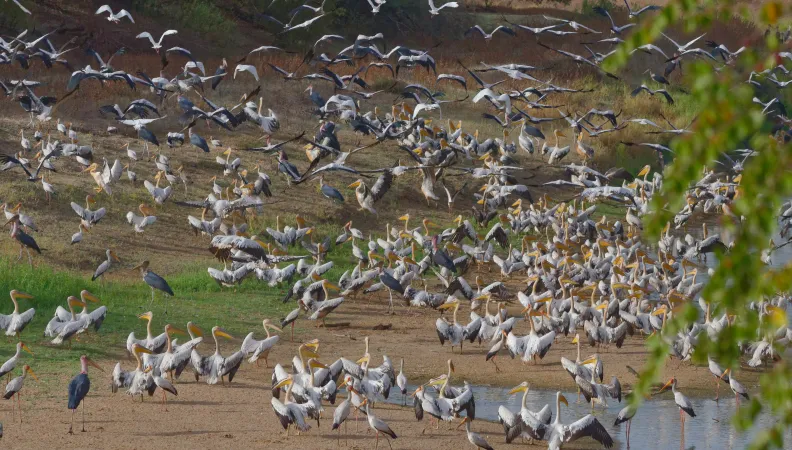
A range of pressures in the Sahel-Saharan region have disrupted the functioning of the Sahel’s large, biodiversity-rich wetlands. To improve the management of natural resources, particularly waterbird populations, the FFEM is supporting the RESSOURCE project.
Context
In Africa, the Sahelo-Saharan eco-climatic zone spans ten countries and is home to nearly one million inhabitants in the Inner Niger Delta. It comprises the four major wetlands of the Sahel (GZHS), whose ecosystems support rich biodiversity. However, recurring episodes of climate stress, along with increases in both human and livestock populations, have led to accelerated environmental degradation and increased desertification. Biodiversity—particularly waterbirds, and especially migratory species—is being significantly affected.
The RESSOURCE project aims to reconcile the goals of conservation and food security for local populations by developing a better understanding of the spatio-temporal dynamics of waterbirds and how they are utilized. The objective is to ensure that bird population harvesting is sustainable and to improve the management of wetlands, which serve as their habitat.
Improving knowledge about waterbirds in relation to climate change is one of the project’s major priorities. This will help better define public policies for monitoring and conserving biodiversity in wetland areas.
Description
The project is divided into five components:
- Monitoring the "waterbird" resource through harmonized counting methods, following capacity building for local stakeholders.
- Promoting the conservation of the "waterbird" resource by implementing integrated management plans in two pilot wetland areas and establishing a small grants fund.
- Assessing the socio-economic importance of waterbird hunting by local populations in order to develop sustainable use mechanisms for this resource.
- Strengthening local capacities in the management of waterbird populations and wetlands, and promoting the project to build a regional community of experts.
- Reinforcing legal and institutional frameworks related to the "waterbird" resource.
Results and expected outcomes
- Communication of the results of the surveys carried out as part of the project, and development of an evidence base to inform the creation of new public policies.
- Preservation of the composition and functioning of wetlands benefiting from a management plan.
- Improved understanding of the socio-economic and ecological impact of waterbird hunting.
- Strengthening capacities through wetland and waterbird conservation actions initiated by local stakeholders.
- Improvement of legal and institutional frameworks.
Innovative and exemplary features
The RESSOURCE project is one of the first to focus specifically on waterbirds as a resource, and to do so in the wetlands of the Sahel, which have hitherto been little studied. It breaks new ground with its approach to quantifying the trade in waterbirds, analysing the socio-economic aspects of this activity and its impact on population dynamics.
The project is the first to plan the use of a standardised counting methodology across all sites involved and to schedule simultaneous, coordinated surveys across all major wetlands in the Sahel. This approach, which should help mitigate the effects of methodological biases in population estimates and strengthen the capacity of local stakeholders in the conservation and sustainable use of this resource, is easily replicable in other wetlands across Africa.
Sustainable Development Goals
ODD10 Reduced inequalities
ODD11 Sustainable cities and communities
ODD15 Life on land