Share the page
Taking a closer look to guide action

Did you know? Why does the FFEM focus on knowledge capture: a strengthened process?
It is a multi-purpose approach: accountability, knowledge enhancement and decision support.
These exercises enable a comparison of approaches, strengthen links between stakeholders from different geographical contexts, and provide a better understanding of the factors leading to success and failure. Recommendations are drawn up at the end of the exercise to facilitate the sharing of lessons learnt from the projects. This helps to identify transferable solutions and informs discussions on scaling up.
These initiatives help to foster exchanges between stakeholders from different regions who face similar challenges, and to create genuine communities of practice and knowledge. Often carried out in partnership with other institutions, they consistently result in the dissemination of findings and exchanges with development practitioners, enabling the results to be discussed and more widely shared.
They also lead to the production of practical tools, such as the tutorial on mangrove restoration.
Knowledge capture enables lessons to be learnt from projects supported by the FFEM, and also allows these lessons to be shared with policy-makers and technical and financial partners. It can thus help to drive changes in practice, inform the FFEM’s strategic direction and facilitate the scaling up of tested solutions. Carried out in conjunction with key milestones on the international agenda, they can also give these lessons a wider reach and help inform the international debate.
How can we turn the lessons learnt from projects into a genuine momentum for change? Maelis Borghese, Head of Evaluations and Knowledge Sharing at the FFEM, explains how this work can help strengthen the impact of FFEM projects.
The FFEM allocates part of its budget to evaluating the projects it supports, but also to building on successful solutions.

Maëlis Borghese: The FFEM supports the trialling of innovative solutions with a view to assessing their effectiveness, but also to inspiring other stakeholders. This requires drawing as many lessons as possible from the projects: best practices, success factors, obstacles and difficulties…
However, those leading the projects do not always have the time, the resources or the necessary perspective to carry out this analysis. To ensure the evaluation is useful, we commission independent expert firms: we ask them to go out into the field and meet with the project’s stakeholders and beneficiaries to produce their reports. Sometimes, when the results are inconclusive, project leaders may also be reluctant to share their experience. Nevertheless, we emphasise the ‘right to experiment’. We fund trials, and we accept
‘Trials that do not yield conclusive results are not failures. They provide useful lessons for moving forward.’ MAËLIS BORGHESE, Head of Evaluations and Knowledge Transfer, Monitoring of the Portfolio in Progress
the risk that some may not work, or may not work straight away. Moreover, we do not refer to them as failures: these projects are rich in lessons, and they are invaluable for the knowledge we draw from all projects addressing a common issue (see boxes).
M.B.: Yes. For example, in the 2023–2026 strategy, the reason we are providing greater support for projects aimed at generating scientific data on biodiversity in the high seas is that previous initiatives have shown this can drive forward political decision-making. By demonstrating the vital role of planktonic ecosystems, the project carried out by the Tara Ocean Foundation between 2017 and 2021 helped the international community to recognise the need to preserve them and to enshrine this in the Treaty on the Conservation of Biodiversity in the High Seas (known as ‘BBNJ’ for Biodiversity Beyond National Jurisdiction), signed in 2023 and currently awaiting ratification.
M.B.: It is difficult to measure this systematically. Sometimes more than ten years can pass between the end of a local pilot scheme and the moment it is adopted more widely across the country, or even elsewhere! However, the FFEM rarely has the resources to monitor how projects develop after its involvement. More often than not, we hear about them through informal channels. The case of Ifrane National Park in Morocco is a good example. In the 2000s, we supported its creation. The Moroccan body responsible for protected areas tested several approaches to shared management with local communities there. We heard nothing more until, 20 years later, the project manager at the time – who had since become head of Morocco’s Department of National Parks and Protected Areas – contacted the AFD and the FFEM again to seek funding to roll out some of these solutions across all the country’s forests. Whilst we are unable to track the long-term outcomes of all our initiatives, we encourage project leaders to establish, from the outset, the conditions necessary for scaling up: the involvement of local authorities and financial stakeholders, impact assessment, and the communication and visibility of results are key elements.
Title: Capitalising on and sharing lessons learnt regarding our major environmental challenges
Our case studies highlight approaches that reconcile the conservation of biodiversity, the sustainable management of resources and regional development. In 2021, the FFEM published a review of its experience spanning 25 years of work and nearly 40 projects dedicated to marine protected areas. This review demonstrates how to better understand and protect marine ecosystems, involve local communities in their management, develop sustainable economic activities and ensure their long-term protection. These insights have helped to inform international debates, notably at the IUCN World Congress and IMPAC5.
What is a marine protected area?

Our funding initiatives focus on the conservation and restoration of marine and coastal environments, which are essential to local communities and the resilience of regions. The Mangroves Initiative, launched in 2018, illustrates this approach: by promoting the sharing of experiences between projects and the networking of experts and researchers from several continents, it helps to advance knowledge, disseminate best practice and accelerate the adoption of proven solutions to better protect and restore mangroves.
Building on this approach, the FFEM, in partnership with IUCN PAPACO, has developed this practical guide setting out the key stages of mangrove restoration, from assessing damage to monitoring rehabilitation efforts. Accessible to all, it offers practical methods for preserving biodiversity, protecting coastlines and enhancing benefits for local communities.
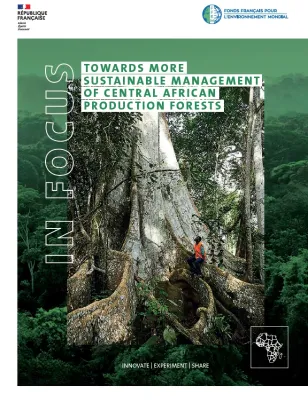
Our report, *IN FOCUS*: Towards More Sustainable Management of Production Forests in Central Africa, draws on lessons learnt from pilot projects and research supported by the FFEM. It highlights the conditions required for forest management that balances biodiversity conservation, carbon sequestration, economic development and the needs of local communities in the world’s second-largest tropical forest, after the Amazon.
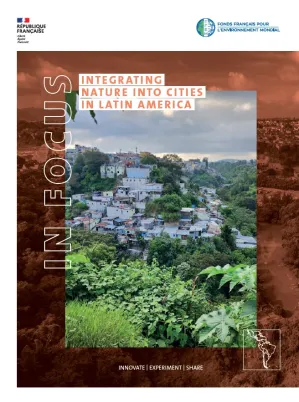
Through the ‘CAP’ SUR’ initiative on integrating nature into cities in Latin America, the FFEM is building on solutions that enable the reintroduction, conservation and restoration of nature in urban areas. The case studies analysed demonstrate how nature can serve as a catalyst for making cities more resilient to climate risks, more inclusive and more sustainable, whilst preserving biodiversity.
CAP' SUR la nature en ville en Amérique latine
CAP’ SUR : Agir en faveur des mobilités actives et du climat en Afrique
As part of its ongoing efforts to support the ecological transition of cities, the FFEM is also focusing on mobility challenges in Africa.
How can we promote more sustainable and climate-resilient urban mobility in African cities? The FFEM’s latest report is based on an analysis of six Sustainable Urban Mobility Plans (SUMPs) developed as part of the MobiliseYourCity partnership across five African countries. It highlights best practices and levers for action to promote walking and cycling whilst integrating climate considerations. It offers lessons learnt and operational recommendations to support local authorities and mobility stakeholders in moving towards more sustainable, inclusive and resilient cities.
The projects supported by the FFEM explore solutions to address the entire product life cycle, with a focus on reducing pollution at source and promoting the circular economy. In particular, they focus on the reduction, reuse and recycling of waste, the management of chemicals and the development of sustainable waste management systems for hazardous waste, with particular attention paid to the combined impacts on human and animal health and on ecosystems.
Our CAP’ SUR collection: learning from the field to take action on a larger scale
The FFEM’s knowledge-sharing initiatives have taken various forms over time and culminated, in 2023, in the launch of the ‘CAP’ SUR’ series, designed by the FFEM to share the lessons learnt and solutions derived from projects and to promote their wider dissemination. Through thematic publications summarising lessons learnt, briefings for decision-makers and short films accessible to a wide audience, the series gives a voice to the leaders of projects supported by the FFEM and helps to share their experiences and lessons learnt.
Our IN FOCUS collection

Focus on our recommendation booklets


Our priority themes


Read our news on capitalisations

The FFEM invites discussion on carbon finance for sustainable development: recap of the roundtable on January ...
Published on January 29, 2025
